Tuesday, January 11, 2022

Texas Trip ~ January 7, 2022

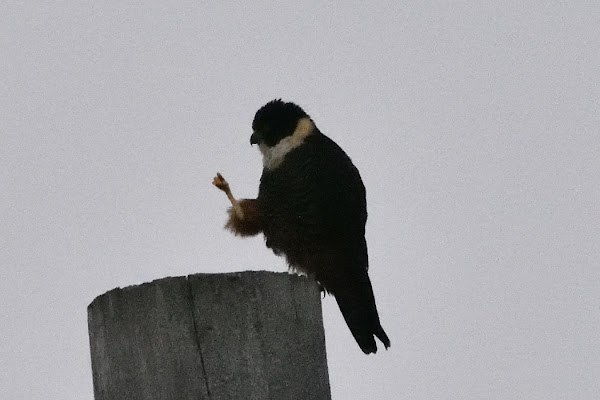
I got up early enough to reach Santa Ana National Wildlife Refuge before dawn. I joined the many other birders at the entrance, hoping that the bird would show up this time. It was pretty cold for south Texas. After being in the 80's the day before, a cold front had dropped the temperatures into the 40's and there was a strong wind. I was glad that I had my winter coat with me. At around 7:25, the Bat Falcon was spotted flying over the refuge and then, thankfully, flew in and landed on the pole across from the entrance road. It was still somewhat foggy, so my photos didn't turn out that great, but I was just glad to get to see it.

After about five minutes, it flew east and dove on a passing Red-tailed Hawk. We then watched as it veered around like a large swift, dove on a bird that just missed becoming a meal, and then headed south into the refuge.
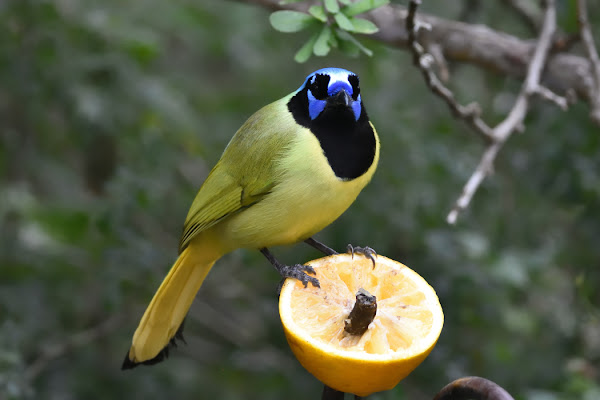
I walked into the refuge and scanned all visible snags from the hawk tower to no avail. I continued down the Wildlife Drive (closed to vehicles) to check out the one snag near the Bobcat Trail intersection where the bird had been sporadically appearing during the day. Again, no bird. I then walked the Pintail Lakes Trail to see what was there while having a large open area to watch from. The cold probably had something to do with the lack of landbirds. The walk to the lakes only produced a Great Kiskadee, a few Green Jays, Northern Cardinals, a White-tipped Dove, a Lincoln's Sparrow, two Ladder-backed Woodpeckers, a Yellow-bellied Sapsucker, and a Golden-fronted Woodpecker.
An American White Pelican and a Roseate Spoonbill circled the first body of water that also contained Double-crested and Neotropic Cormorant.
The next lake held Pied-billed and Least Grebes, White-faced and White Ibis, a Belted Kingfisher, Northern Shovelers, Northern Pintail, Lesser Scaup, a few Mottled Ducks, a Green-winged Teal, and a couple Cinnamon Teal among the Blue-winged Teal.
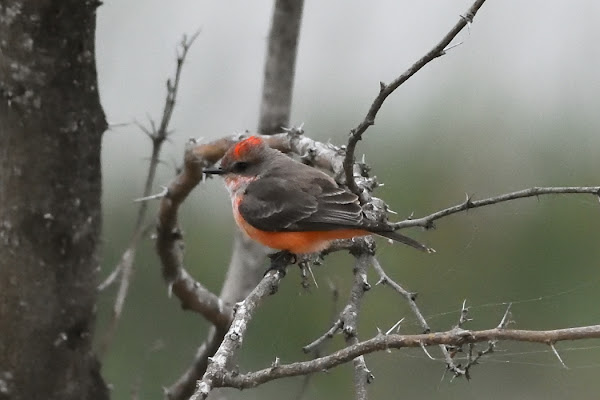
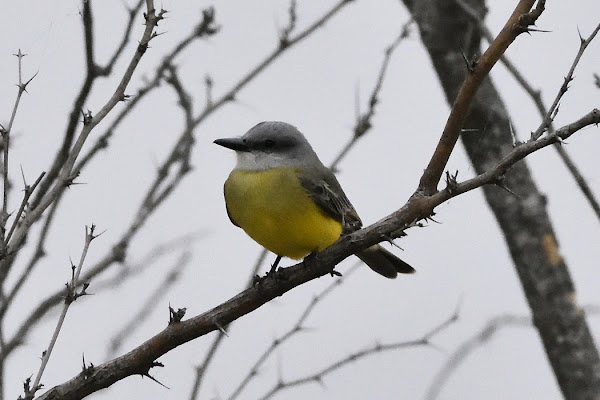
Raptors seen in the air included Osprey, Northern Harrier, and Cooper's, Harris's, and Gray Hawk. Two birds that were most likely Tropical Kingbirds were at the corner of the lake. Tropical Kingbirds and Couch's Kingbirds look very similar and when they aren't calling, it can be tough to determine which one is which. The long bill on this bird points to Tropical. An Eastern Phoebe and a young Vermilion Flycatcher were also there.
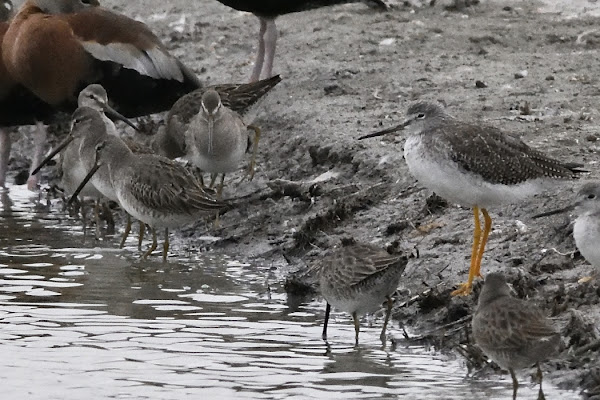
The third lake produced Black-bellied Whistling-Ducks, Great Blue and Green Heron, Snowy and Great Egrets, Greater Yellowlegs, Long-billed Dowitchers, Least Sandpipers, and Black-necked Stilts.
I left Santa Ana and drove over to Estero Llano Grande State Park. A young Harris's Hawk was on a pole at the parking lot.
A Bronzed Cowbird visited the feeder with the Red-winged Blackbirds. There were several hundred Black-bellied Whistling-Ducks throughout the park.

A walk along Alligator Lake produced Anhinga and Yellow-crowned and Black-crowned Night-Herons.

A birder at the visitor center tipped me off to an area to look for Common Pauraque. I found the area that she described yet still had a little trouble spotting the bird. It was like doing a "Where's Waldo" puzzle among the sticks and twigs. It was so surprisingly close to the trail that I had to back up to take its photo.

With some more searching, I eventually found two more birds nearby. After only seeing this species along a road in car headlights years ago, seeing these three in daylight was a real treat. It was definitely one of the highlights of the trip.

There were Least Grebes and White Ibis in Dowitcher Pond in addition to the many Black-bellied Whistling-Ducks. Other birds found here that weren't seen at Santa Ana included Gadwall, Common Gallinule, and American Coot.

I returned to Santa Ana to see if the Bat Falcon would perch on the pole before going to roost. At 5:40, it did just that. Unfortunately, the failing light made getting good photos difficult once again.

Soon after, it headed for its palm tree roost west of the refuge entrance.
I returned to Pharr and spent my second night at the LaQuinta Inn.

Texas Trip ~ January 8, 2022

I was a little bummed out as I drove through fog and drizzle on the way to Santa Ana before dawn. Once again, I walked to the entrance and waited to see if the bird would use its pole this morning. At around 7:30, I saw the bird drop out of its roost palm and head for the pole. It perched there for nearly a half-hour but, again, conditions were lousy for getting good photos. At one point, it lifted its leg, showing off its rusty leg feathering.
After scanning the area from the hawk tower and checking the snag near the Bobcat Trail, I decided to leave the refuge and make the drive over to Laguna Atascosa National Wildlife Refuge and see if I could find the Tropical Parula that had been there. I checked out the photo blind near the headquarters and saw White-tipped Dove, Long-billed Thrasher, and a few Green Jays.

Because I only had one poor photo of a Clay-colored Thrush taken with a film camera back in the 1990's (it was known as Clay-colored Robin back then), I was very happy to get this nice photo of one as it came in to get a drink.
Other birds seen there while walking the Kiskadee Trail and part of the Mesquite Trail included Eurasian Collared-Dove, Osprey, Golden-fronted Woodpecker, and Black-crested Titmouse, but no warblers were found. The Wildlife Drive was closed, so I headed for the Aplomado Falcon viewing area instead. Along the road on the way out of the refuge, a Crested Caracara sat on a pole and a Harris's Hawk perched on a wire. At the viewing area, I saw American White Pelican, Great Egret, Great Blue Heron, Loggerhead Shrike, Eastern Meadowlark, a Harris's Hawk, a Red-tailed Hawk, and two White-tailed Hawks, but no Aplomado Falcons.
The El Tular Ponds held Laughing Gulls, some Herring Gulls, American Coots, and an amazing number of Redheads that I estimated to be around a thousand. To give you an idea, this photo shows only the western portion of the pond area.
I headed back to Santa Ana. Just east of Progreso along Highway 281, I noticed a White-tailed Kite perched on a wire. I made a U-turn, worked my way very slowly down the shoulder of the road, and got some nice photos of this cool-looking bird.
I spent the last two hours of the day at Santa Ana hoping to finally get some better photos of the Bat Falcon. As I got out of the car in the parking lot, I spotted a young Peregrine Falcon circling overhead.
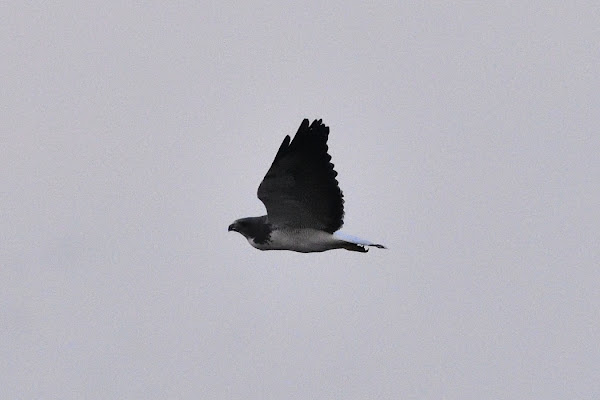
Out at the entrance, numbers of raptors were passing by. They included 2 American Kestrels, a Merlin, 3 Crested Caracaras, 2 Harris's Hawks, a Red-tailed Hawk, and 5 White-tailed Hawks. A young White-tailed flew by to the east.

An adult White-tailed was seen feeding on a snake in the middle of the field across the highway. After downing its meal, it flew by to the west.

At 6:19 and very near dark, the Bat Falcon showed up on the pole very briefly before heading to roost, thwarting any photo opportunities. I left the bird for the last time and drove to Raymondville where I stayed at a Holiday Inn Express.

Texas Trip ~ January 9, 2022

I had already booked a motel room in the outskirts of Houston, so my plan was to bird my way north, stopping at Goose Island State Park along the way. As I drove Highway 77 north through the King Ranch, raptors were abundant. I compiled a list of 48 Black Vultures, 7 Turkey Vultures, 10 Crested Caracaras, 11 American Kestrels, and hawks that included a Cooper's, 4 Harris's, 10 Red-tailed, and 2 White-tailed along a 30-mile stretch. I stopped a few times to get photos of Crested Caracaras and Harris's Hawks.


I made a quick stop at the Sarita rest area. A group of around 30 Brewer's Blackbirds, 11 Great-tailed Grackles, 3 Eurasian Collared-Doves, and 4 Mourning Doves suddenly dove for cover when a young Peregrine Falcon zipped overhead and continued off to the east.
I continued on to Goose Island State Park, arriving a little past 10:30. I had seen Whooping Cranes before, but they were always at a great distance. Just south of the entrance gate, I stopped at the observation deck. From there, I was able to see and get a photo of a banded adult.
Nearby, an armada of American White Pelicans flew over the campground section of the park.
I then headed north about a mile to the cow pasture bordered by 8th Street, 12th Street, and Lamar Beach Road. There, I saw 4 Roseate Spoonbills and 3 Sandhill Cranes among 24 Black-bellied Whistling-Ducks, 2 Anhingas, and Great and Snowy Egrets, but the stars of the show were the four Whooping Cranes. Good photos were tough to get due to the distance and the heat waves.


Birds seen in St. Charles Bay from Lamar Beach Road included a Common Loon, Laughing Gulls, and Brown and American White Pelicans.
Storms were moving in and, soon after I decided to leave the park, I drove into one where I had to drop down to 30 miles per hour in order to see the road through the downpour. A few hours later, I checked into my motel in the mid-afternoon and then headed for the Houston Heights Bird Sanctuary. It was here that I saw the resident group of Red-vented Bulbuls. I had seen these birds in Hawaii, but these were the first ones that I had seen in the 'Lower 48'.

Other birds seen there included White-winged Doves, Northern Mockingbirds, and an Orange-crowned Warbler.
Orange-crowned Warbler

I returned to the Drury Inn & Suites motel in Sugar Land and worked on the next day's strategy.